
WeXL AI and GIMS Partner to Empower Indian Youth for Viksit Bharat 2047
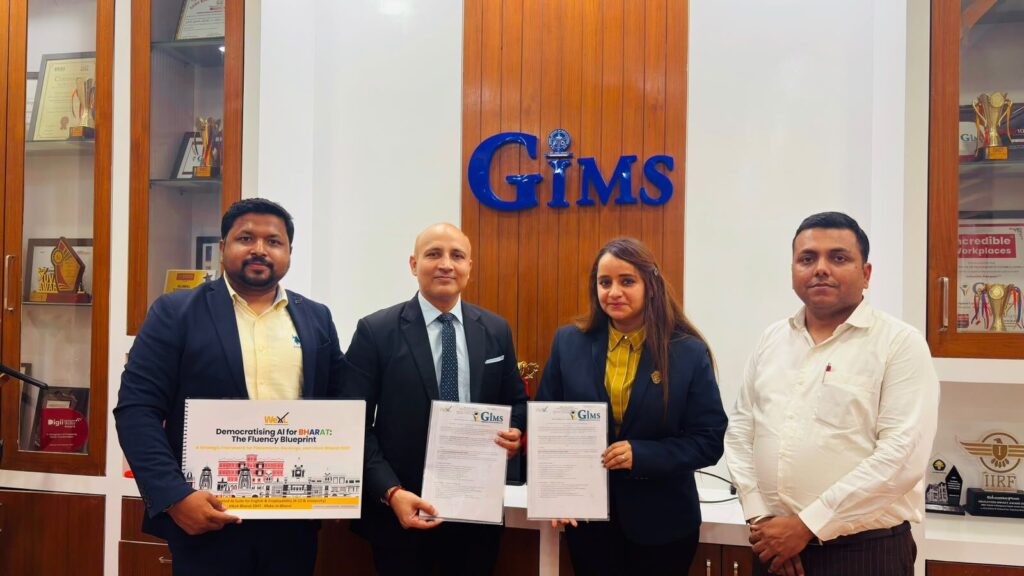
WeXL AI and GIMS Partner to Empower Indian Youth for Viksit Bharat 2047 WeXL AI is thrilled to announce a landmark collaboration with the GNIOT Institute of Management Studies (GIMS). Together, we are pushing the boundaries of higher education to build a powerhouse of homegrown talent—the very leaders who will anchor India’s ascent toward the grand vision of Viksit Bharat @ 2047. Language is the New Code In today’s AI-driven world, proficiency in Listening, Speaking, Reading, and Writing (LSRW) has evolved far beyond basic communication. It is now the vital baseline for successful human–machine collaboration. Through this partnership, GIMS students will master the ultimate interface of tomorrow, proving that language is the true code of the Gen-AI era. The Future-Ready Bharat Ecosystem To unlock the true potential of our homegrown talent and bridge the global skill gap, WeXL AI is deploying our flagship AI powerhouses directly to the GIMS campus: Bharat English Test (BET): Bharat’s premier, high-accuracy language assessment designed to baseline and benchmark true professional communication skills, ensuring Indian youth are ready for the global stage. FluentEdge: Our 24/7 personalized AI communication agent that serves as an always-on mentor, offering real-time feedback to build elite corporate leaders. A Visionary Partnership This transformative journey is made possible by leaders who share a deep commitment to nation-building and academic excellence. We extend our heartfelt gratitude to Mr. Swadesh Kumar Singh (CEO, GIMS) and Dr. Bhupender Kumar Som (Director, GIMS) for their visionary leadership and for empowering the next generation with the tools to innovate, lead, and excel. “By democratizing elite communication skills through AI, we aren’t just preparing students for jobs—we are equipping the architects of India’s future.” Ready to Boost Outcomes for Your Learners? Book a AI FluentEdge Demo
Amrita Vishwa Vidyapeetham Partners with WeXL AI to Pioneer AI-Driven Student Readiness
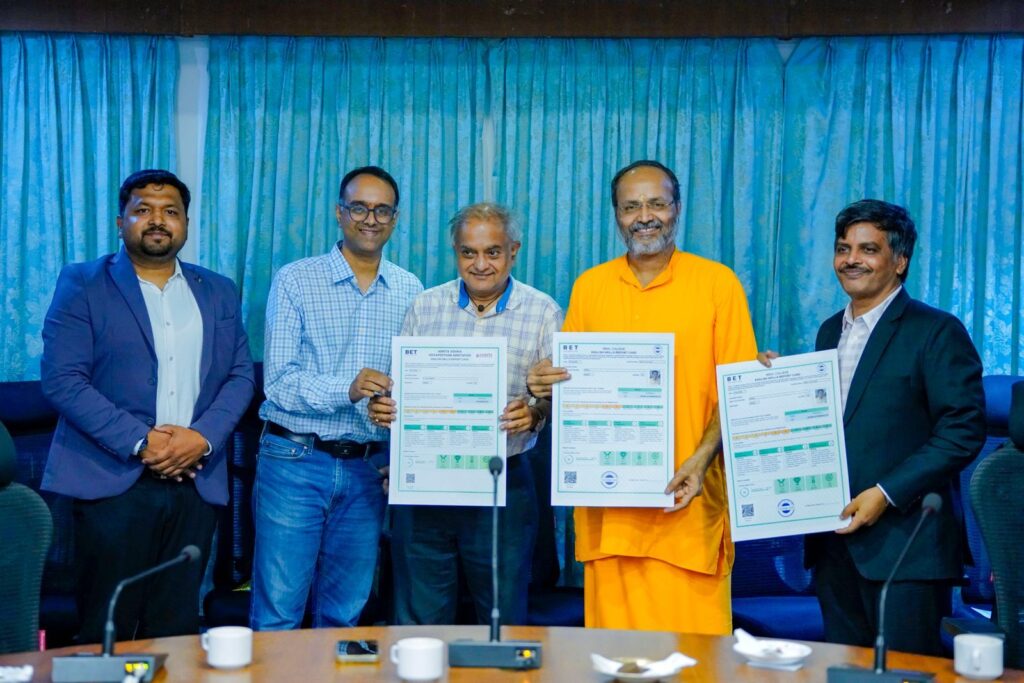
Amrita Vishwa Vidyapeetham Partners with WeXL AI to Pioneer AI-Driven Student Readiness Amritapuri, India — WeXL AI is honored to announce a landmark partnership with the prestigious Amrita Vishwa Vidyapeetham. This collaboration is designed to place Amrita students at the forefront of the modern academic frontier by ensuring proficiency in LSRW as the vital baseline for successful human-machine collaboration. The collaboration will see the implementation of: Bharat English Test (BET): Bharat’s premier language assessment designed to baseline and benchmark true professional communication skills. FluentEdge: A personalized AI agent that serves as an always-on mentor, offering real-time feedback to build elite corporate leaders. This transformative journey is guided by an extraordinary vision of holistic excellence. We extend our deepest gratitude to Her Holiness Mata Amritanandamayi (Amma), Chancellor, whose profound vision for blending advanced technology with deep-rooted values serves as our inspiration. A special thank you to Br. Vishwanathamrita Chaitanya, Director, for his exceptional leadership in making this AI-driven roadmap a reality for Amrita students. Ready to Boost Outcomes for Your Learners? Book a AI FluentEdge Demo
Invertis University Champions Viksit Bharat with WeXL AI’s Indigenous Learning Ecosystem
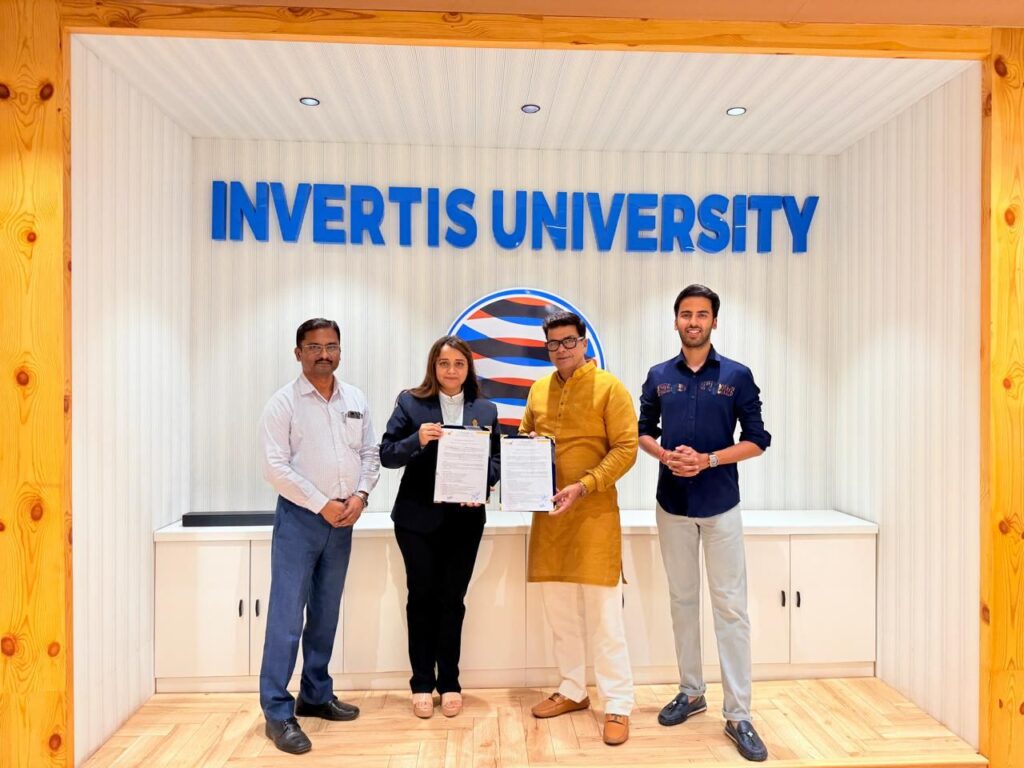
Invertis University Champions Viksit Bharat with WeXL AI’s Indigenous Learning Ecosystem Bareilly, India — WeXL AI is incredibly proud to announce a milestone collaboration with Invertis University. Together, we are leading a massive wave of change across Western UP by integrating a patented, NEP 2020-aligned AI ecosystem into the university’s academic DNA, firmly championing LSRW as the “New Code” for the Gen-AI era. The collaboration will see the implementation of: Bharat English Test (BET): A powerful diagnostic AI engine that maps student proficiency to global standards from day one. FluentEdge: A hyper-personalized adaptive engine that curates learning paths to turn students into MNC-ready professionals. By choosing a Swadeshi solution, this partnership also actively halts Forex drain, investing directly back into India’s economy. A massive shoutout to the visionary leadership of Dr. Umesh Gautam (Hon’ble Chancellor & Mayor of Bareilly) and Parth Gautam (Pro-Chancellor) for boldly stepping toward global employability and building a truly Viksit Bharat. Ready to Boost Outcomes for Your Learners? Book a AI FluentEdge Demo
Muzaffar Nagar Medical College Integrates WeXL AI to Elevate Clinical Communication
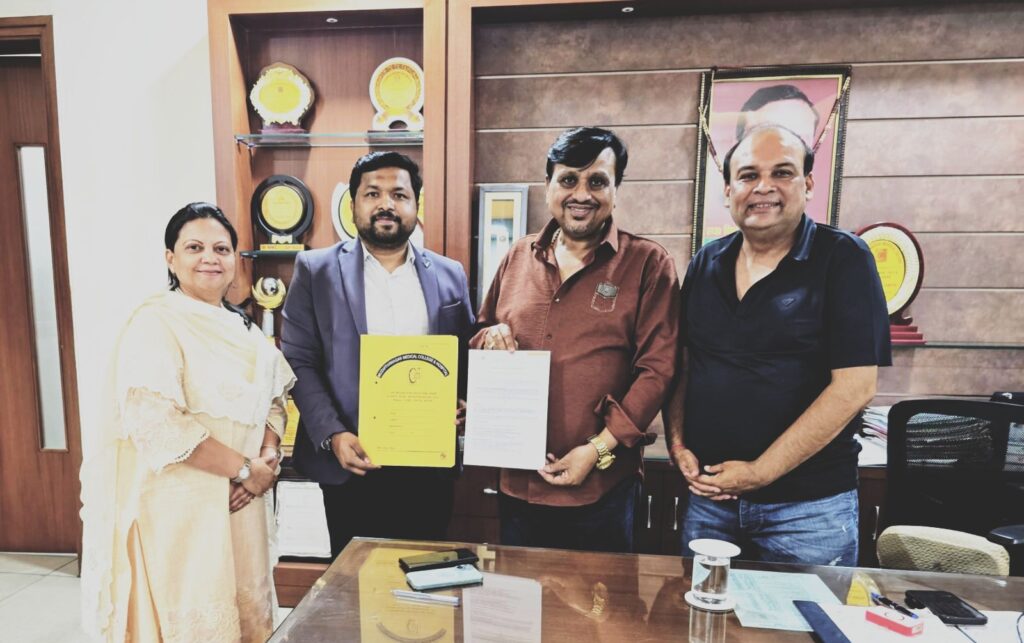
Muzaffar Nagar Medical College Integrates WeXL AI to Elevate Clinical Communication Muzaffar Nagar, India — WeXL AI has officially partnered with Muzaffar Nagar Medical College (MNMC) to redefine how tomorrow’s doctors master the art of clinical communication and professional empathy. Recognizing that a precise diagnosis is only as effective as the communication behind it, this initiative integrates our AI-powered ecosystem directly with the NMC’s AETCOM module, benchmarked against the global Kalamazoo checklist. The collaboration will see the implementation of: Bharat English Test (BET): A high-accuracy assessment designed to baseline and elevate language proficiency, ensuring clear communication across diverse medical environments. FluentEdge: A 24/7 personalized AI coach providing MBBS students with real-time feedback on bedside manner, empathy, and active listening. We are proud to partner with a team that is mentoring “Master Communicators” for the modern healthcare landscape. Our deepest gratitude to Shri Sanjay Gupta (Secretary – Management), Dr. Rohtas Kanwar Yadava (Principal), and Dr. Shruti Sehgal (Incharge & Coordinator) for their visionary support in bridging the gap between medical ethics and AI-driven communication. Ready to Boost Outcomes for Your Learners? Book a AI FluentEdge Demo
WeXL AI and JECRC University Partner to Revolutionize Student Employability
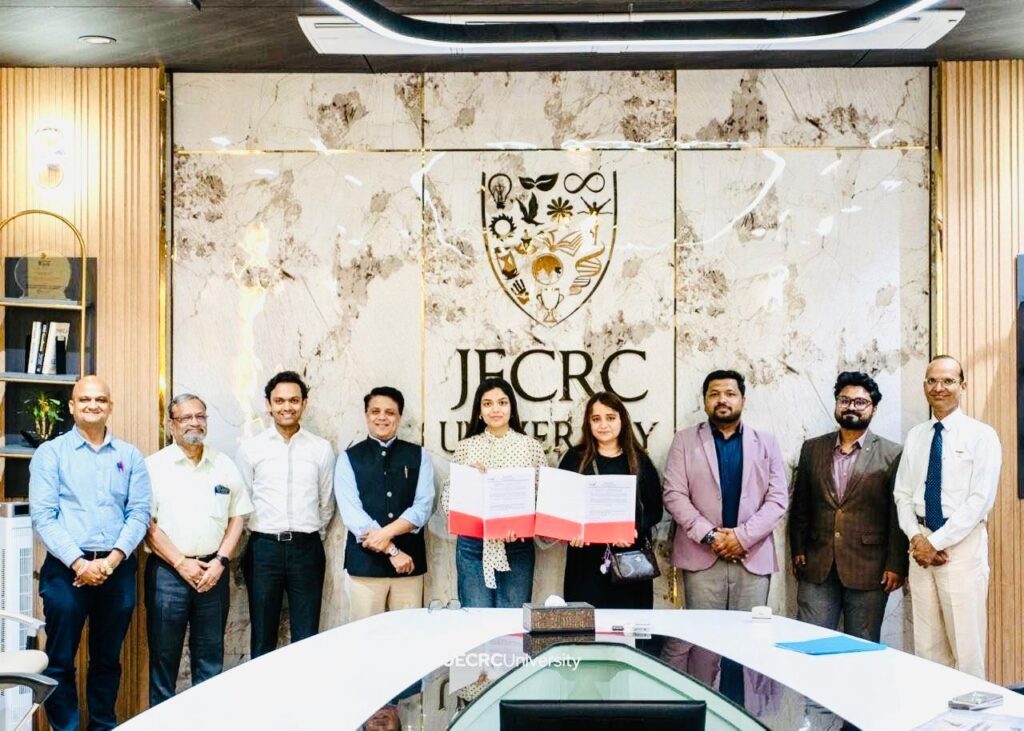
WeXL AI and JECRC University Partner to Revolutionize Student Employability Jaipur, India — WeXL AI is proud to announce a strategic partnership with JECRC University and Jaipur Engineering College and Research Centre (JECRC). This collaboration will revolutionize how students master communication and professional readiness for the Gen AI era, shifting the focus from basic communication to advanced human-machine collaboration. The collaboration will see the implementation of: Bharat English Test (BET): India’s first high-accuracy language skill test designed to measure communication proficiency with precision. FluentEdge: A personalized AI agent acting as a 24/7 communication coach, providing students with real-time feedback to lead and succeed. This transformation is made possible by the forward-thinking leadership at JECRC. We are deeply grateful to Shri Arpit Agrawal (Vice Chairperson), Dheemant Agrawal (Director Strategy), and Dhruvi Agarwal (Director – People & Culture) for championing the integration of AI into the student success roadmap. A special thanks to the training and placement directors, Tapan Das and Mukesh Agarwal, for ensuring these tools translate into real-world career success. Ready to Boost Outcomes for Your Learners? Book a AI FluentEdge Demo
Quantum University Roorkee Selects WeXL AI to Lead AI Adoption in Higher Education
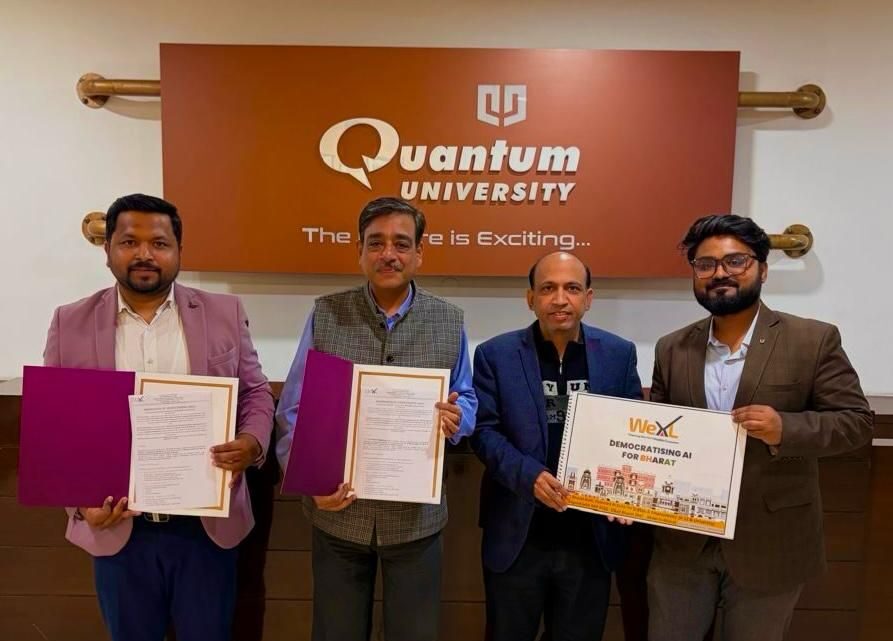
Quantum University Roorkee Selects WeXL AI to Lead AI Adoption in Higher Education Roorkee, India — WeXL AI is excited to announce a strategic partnership with Quantum University, Roorkee, a recognized leader in AI adoption within the higher education sector. The collaboration will see the implementation of: Bharat English Test (BET): A localized, indigenous skill assessment tool to benchmark and certify proficiency. FluentEdge: An AI-powered personalized agent that creates tailored learning paths to build student confidence and fluency. Quantum University’s bold embrace of AI sets a new standard for Indian universities. We are grateful to Mr. Shobhit Goyal (Vice Chairman) and Prof. Vivek Kumar (Founding Vice Chancellor) for their steadfast support in shaping tomorrow’s leaders through technology.
IPEM Group of Institutions Joins Forces with WeXL AI for Agentic AI Learning
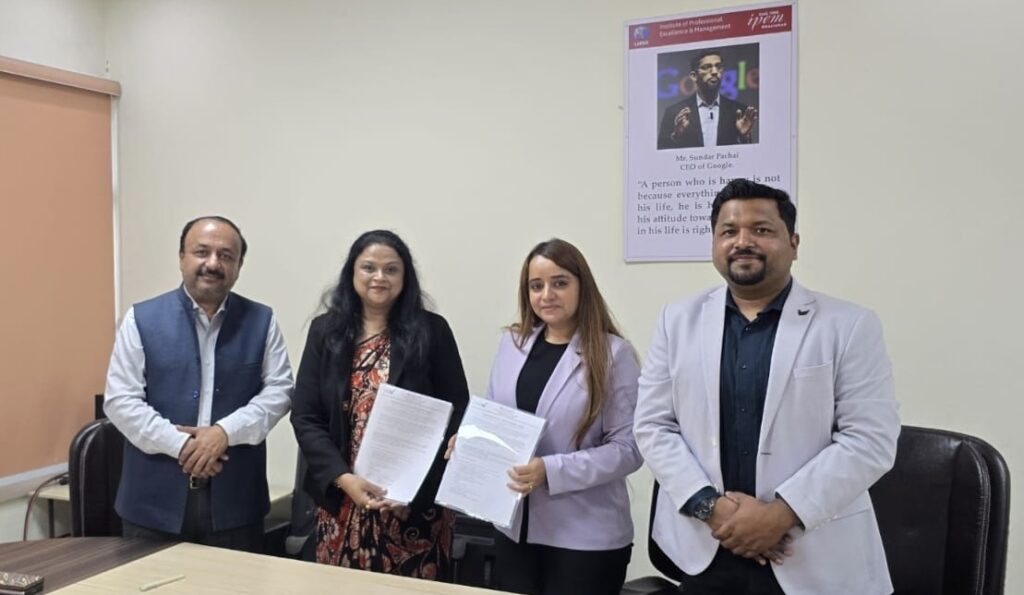
IPEM Group of Institutions Joins Forces with WeXL AI for Agentic AI Learning National News — In a move to revolutionize English proficiency testing and personalized education, WeXL AI has entered a strategic collaboration with the IPEM Group of Institutions. Through this partnership, IPEM students will gain access to FluentEdge, our cutting-edge Agentic AI personalized learning agent, and the Bharat English Test (BET). These tools are designed specifically to bridge the gap between local talent and global opportunities by providing indigenous, high-quality assessment and adaptive learning. WeXL AI acknowledges the support of Mr. Anupam Goel (Secretary, IPEM), Mr. Aviral Goel (Advisor, IPEM), Prof. (Dr.) Monika Sainger (Director, IPEM), and Mr. Shashank Chaudhary (Dean, Academics) for their commitment to academic innovation.
WeXL AI and RKGIT Ghaziabad Partner to Fuel Skill India 2.0
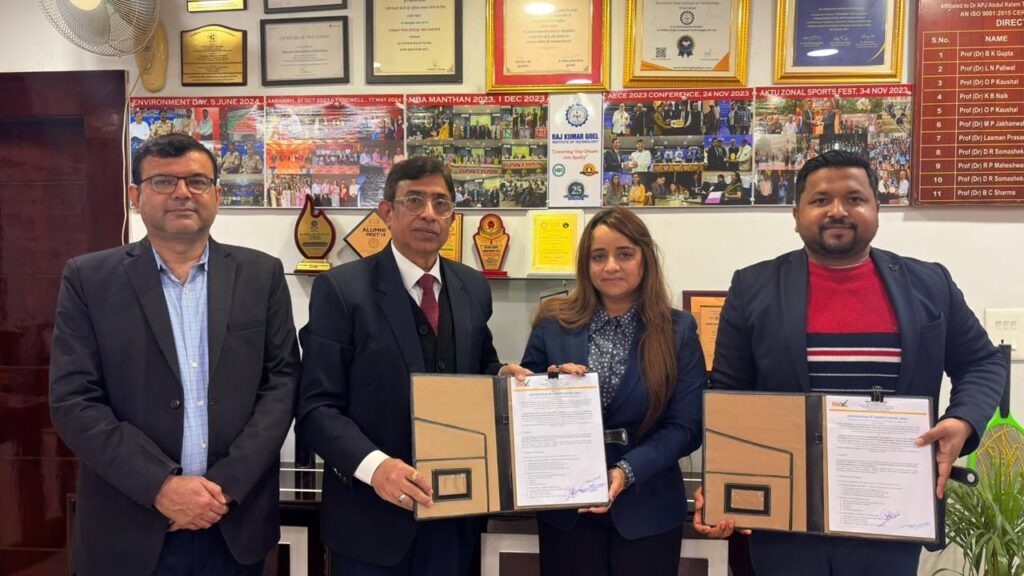
WeXL AI and RKGIT Ghaziabad Partner to Fuel Skill India 2.0 WeXL AI is pleased to announce a transformative language skills partnership with Raj Kumar Goel Institute of Technology (RKGIT), an institution with over two decades of engineering and academic excellence. This alliance focuses on empowering students and professionals with globally competitive English skills through WeXL AI’s proprietary technology: Bharat English Test (BET): India’s first standardized, AI-powered language proficiency benchmark. FluentEdge: A 24/7 personalized AI learning coach providing real-time feedback and adaptive mastery paths. We extend our gratitude to Mr. Akshat Goel (Vice Chairman) and Dr. BC Sharma (Director) for their visionary leadership in bringing AI-driven innovation to the RKGIT community.
Omega Faculty Development Program at WeXL AI
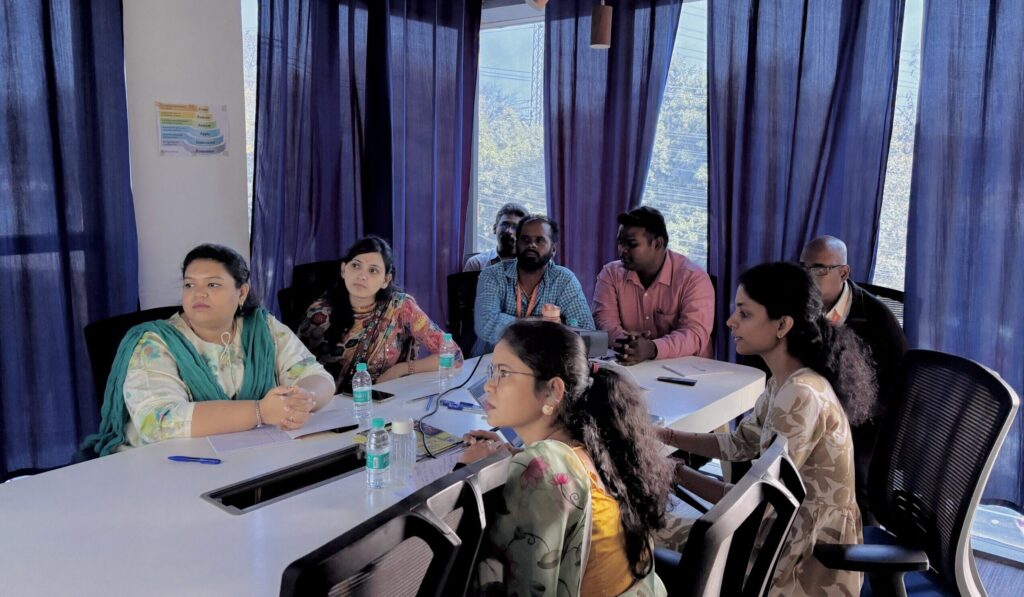
Omega Faculty Development Program at WeXL AI We were delighted to host a Faculty Development Program (FDP) at the WeXL office for the Omega Group of Institutions. The session focused on: Strengthening modern teaching methodologies Enhancing classroom engagement Adopting effective academic and assessment practices Through interactive discussions, practical insights, and hands-on demonstrations, the program aimed to support faculty members in delivering impactful learning experiences and embracing continuous professional growth. We appreciate the enthusiastic participation of the Omega faculty and look forward to continued collaboration in shaping future-ready education. Testimonial Feedback from Our Community https://wexlai.com/wp-content/uploads/2026/01/WhatsApp-Video-2026-01-06-at-17.58.18.mp4https://wexlai.com/wp-content/uploads/2026/01/WhatsApp-Video-2026-01-06-at-17.58.20.mp4https://wexlai.com/wp-content/uploads/2026/01/WhatsApp-Video-2026-01-06-at-17.58.19-1.mp4https://wexlai.com/wp-content/uploads/2026/01/WhatsApp-Video-2026-01-06-at-17.58.19.mp4
Transforming Student Employability: From Last-Mile Fix to Systemic Scale.
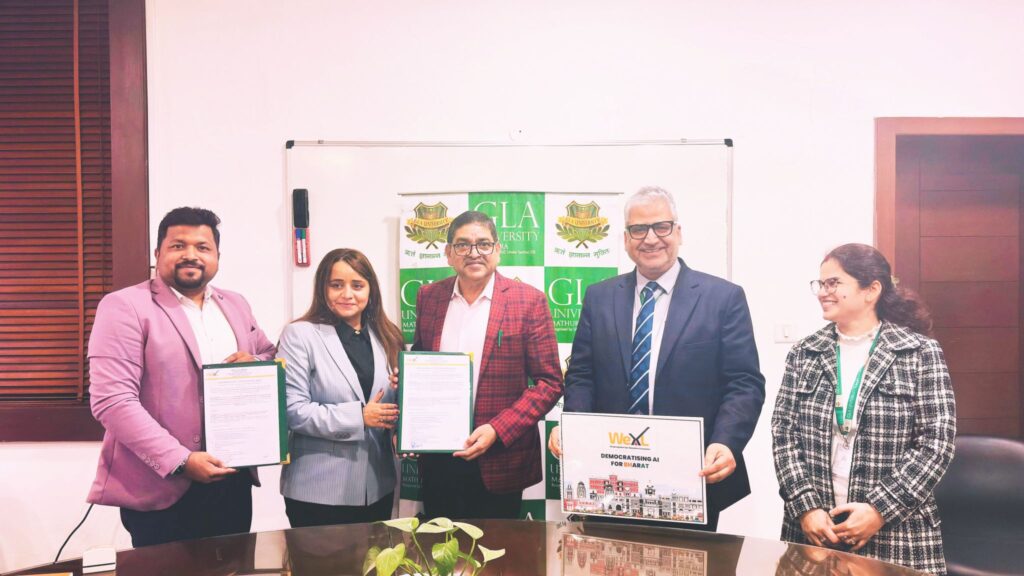
Institutionalizing Employability: GLA University Partners with WeXL AI to Scale Student Readiness We are proud to announce a strategic partnership between GLA University and WeXL AI. This collaboration marks a significant shift in how higher education institutions approach student readiness, moving beyond traditional training methods to adopt a systemic, scalable, and technology-driven model. The Core Philosophy: Beyond “Last-Mile” Fixes The GLA University × WeXL AI partnership is founded on a clear institutional belief: Communication, Confidence, and Employability must be built systematically and at scale. For too long, these critical skills have been treated as “last-mile fixes”—interventions attempted only right before placement season. This partnership challenges that status quo. By integrating WeXL AI’s capabilities, GLA University is ensuring that employability is not an afterthought, but a fundamental pillar of the academic journey. The Methodology: A repeatable, AI-Led Framework To achieve campus-wide readiness, GLA University is adopting our Bharat-built, AI-led framework. This provides a repeatable model that standardizes excellence while catering to individual student needs. The framework operates on a five-stage cycle: Benchmark: Establishing precise baselines for every student’s current skill level. Personalise: Curating learning paths based on individual gaps and strengths. Practice: providing AI-driven, consistent drills to build articulation and confidence. Certify: Validating skills with data-backed credentials. Track: Offering real-time analytics to monitor progress at scale. The Impact: MNC-Grade Outcomes The ultimate goal of this deployment is to ensure MNC-grade readiness for every student. By digitizing and tracking the development process, outcomes become: Visible to Leadership: Enabling data-driven decision-making at the university level. Credible to Recruiters: providing validated proof of a candidate’s communication proficiency. Looking Ahead We are honored to partner with GLA University in this transformative initiative. Together, we are committed to building future-ready Indian talent prepared to succeed on the global stage.